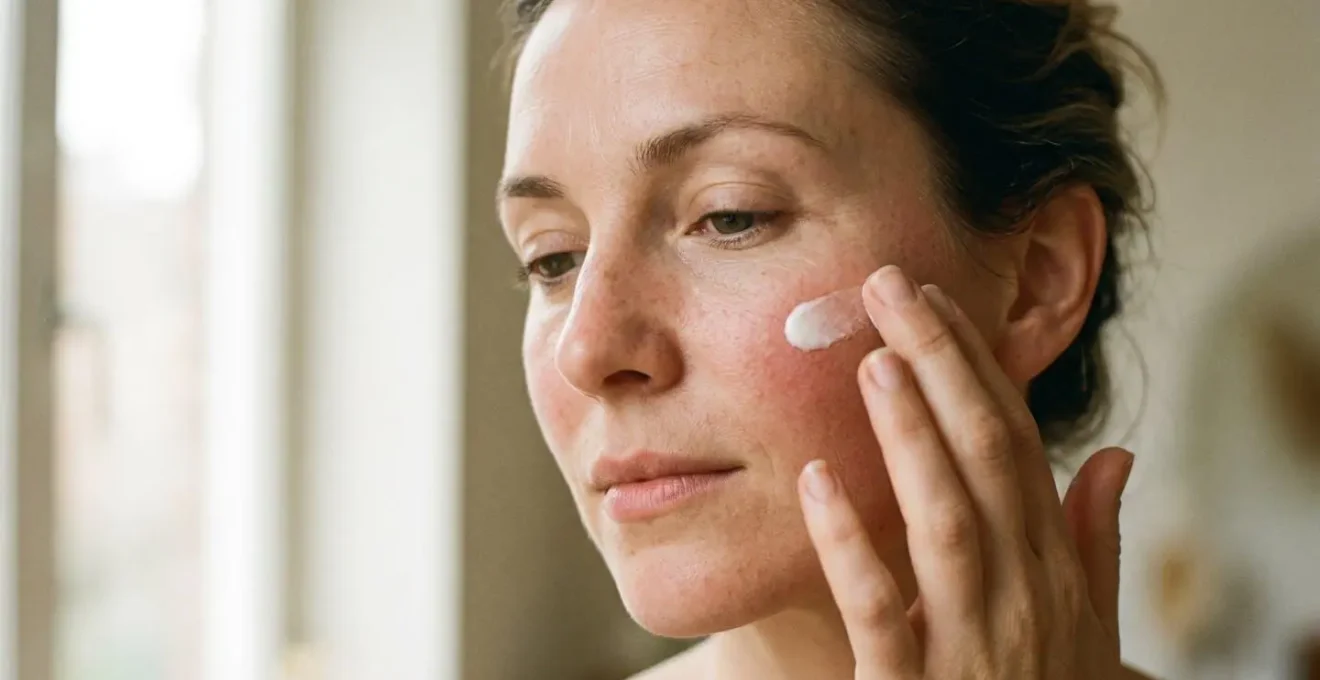
Standing in a pharmacy aisle with a dozen SPF labels staring back at you is a surprisingly paralysing experience. The numbers change, the promises overlap, and nothing on the packaging tells you whether this particular formula will sit comfortably on reactive skin — or trigger a breakout by lunchtime. This guide cuts through the label noise with five concrete criteria, so the next tube you pick up is actually matched to what your skin needs.
SPF level and UVA rating: what the numbers actually mean
The SPF figure printed on a bottle measures how effectively a product delays UVB-induced sunburn compared to unprotected skin. An SPF 30 filters roughly 97% of UVB rays; SPF 50+ filters around 98%. The practical gap between those two figures is narrower than most marketing suggests — but the gap between SPF 15 and SPF 50+ is significant enough to matter when exposure is prolonged or skin is pale and reactive.
80 000 new cases
Skin cancers diagnosed in France in 2024, linked primarily to excessive sun exposure — a figure that underscores why adequate SPF is non-negotiable rather than optional
According to Santé publique France, nearly 80,000 new skin cancer cases were recorded in 2024, with excessive sun exposure identified as the dominant cause. For light or sun-intolerant skin, the Société Française de Dermatologie explicitly recommends SPF 50+ as the baseline, not an upgrade.
UVA protection is the second axis — and the one most shoppers overlook. UVB rays cause burning; UVA rays penetrate deeper and accelerate premature ageing and cellular damage. In the UK, the star-rating system (one to five stars) indicates the ratio of UVA to UVB protection. A product rated four or five stars at SPF 50+ delivers what dermatologists describe as broad-spectrum protection. The EU benchmark requires that UVA protection be at least one-third of the SPF value — encoded on labels as the UVA circle logo. La Roche-Posay Anthelios Hydrating Cream Fragrance Free SPF50+ meets the UVA*35 threshold, meaning its UVA coverage is verified at 35% of its SPF value or above.
One pattern observed across sun protection literature is that consumers routinely misread SPF as a total shield rather than a delay factor. At SPF 50+, the protection erodes measurably after roughly two hours of direct exposure — or sooner with perspiration, water contact or towel-drying. The reapplication rule is not a commercial suggestion: it is the mechanism that keeps the stated SPF figure valid throughout the day.
Matching filter type and texture to your skin profile
The mineral-versus-chemical debate dominates skincare conversations, but the more useful question for most people is: which formula will your skin tolerate without irritation, and which will you actually wear every morning? Both filter families can deliver high SPF values; the differences lie in how they interact with skin chemistry and how they feel during use.
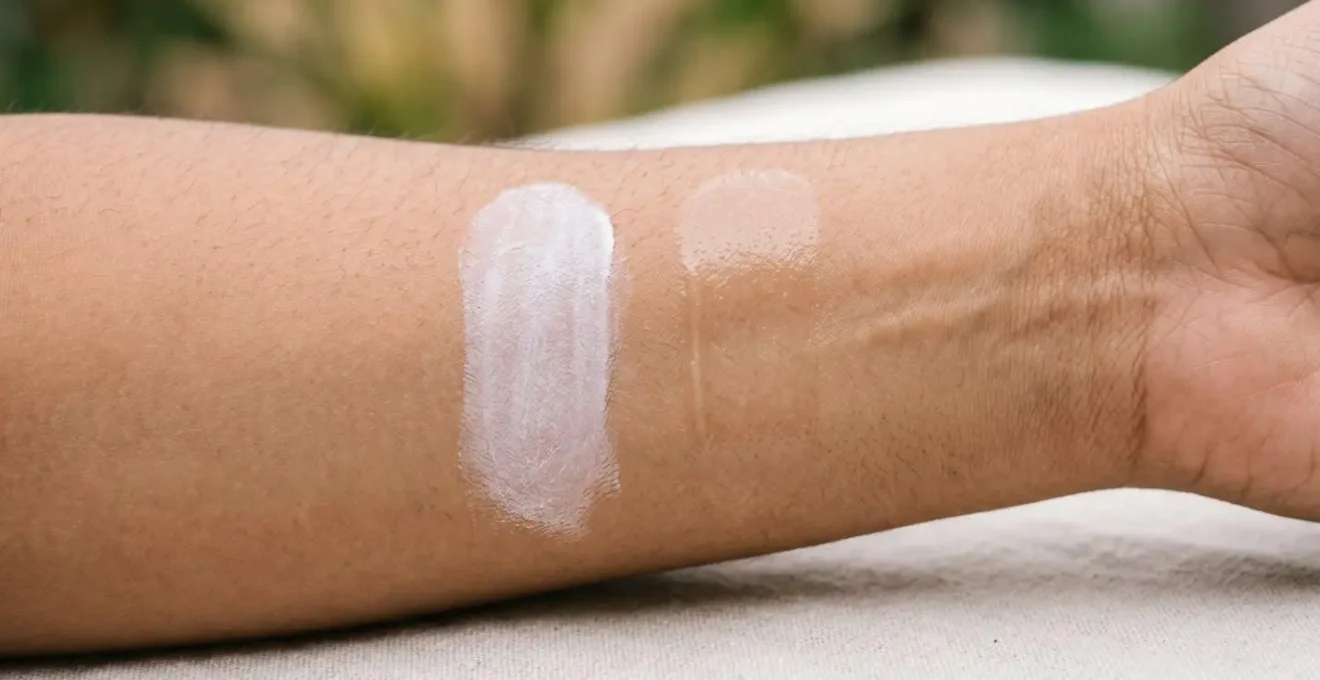
Mineral filters (zinc oxide, titanium dioxide) sit on the skin surface and physically deflect UV radiation. They are generally better tolerated by reactive and allergy-prone skin, carry a lower sensitisation risk and are the default recommendation in paediatric dermatology. The historical trade-off — a chalky white residue — has been progressively reduced through micronised formulations, though trace white cast can still occur on deeper skin tones.
Chemical filters (such as avobenzone, tinosorb, mexoryl) are absorbed into the skin and convert UV energy into heat. They tend to produce lighter textures with no white cast, making them easier to layer under make-up or use on the body. For skin that is sensitive but not allergic, a fragrance-free, dermatologically tested chemical-filter product often strikes the better balance between comfort and compliance.
For people with sensitive or reactive skin, the formulation variables that matter most are fragrance content (often the primary irritant in cosmetic products), alcohol concentration, and whether the product has been tested under ophthalmological control — relevant for anyone who wears contact lenses or whose skin reacts near the eye contour. A fragrance-free SPF50+ formula tested under both dermatological and ophthalmological supervision, such as Anthelios Hydrating Cream Fragrance-Free SPF50+ – La Roche-Posay, removes two of the three most common tolerance barriers in one product choice.
The suncare market grew by 7.2% in 2024, reaching 480 million euros, with demand for mineral and hybrid-filter innovations driving much of that expansion, according to the Observatoire des Cosmétiques 2025 barometer. This growth reflects not just seasonal buying but a structural shift: consumers are increasingly seeking daily-use facial products that combine credible SPF levels with skin-compatible formulations rather than buying separate moisturiser and sun protection.
- If your skin is reactive, allergy-prone or prone to rosacea:
Prioritise fragrance-free formulas with mineral filters (zinc oxide or titanium dioxide). Verify dermatological testing certification on the packaging.
- If your skin is oily or combination and prone to shine:
Choose a chemical-filter formula with a matte or fluid finish. Look for non-comedogenic labelling and low alcohol content.
- If your skin is dry and you rely on a single step in the morning:
Opt for a hydrating SPF cream that combines moisturising agents with broad-spectrum protection, avoiding the need for a separate moisturiser layer.
- If you wear contact lenses or have sensitive periorbital skin:
Select a product carrying ophthalmological testing validation — this confirms safe use close to the eye contour without risk of lens irritation.
Context of use: face, body and daily wear
The context in which a sunscreen gets used shapes which product makes practical sense. A formula designed for all-day urban wear performs differently from one built for beach exposure, and conflating the two leads to either under-protection or a product that sits unused because the texture is wrong for the routine.
For facial use in urban environments — commuting, outdoor lunch breaks, walking between meetings — the most consistent predictor of real-world protection is whether someone will reapply. Heavy, greasy textures or formulas that leave a white cast under make-up or on darker skin tones create friction in the routine; the product gets skipped. A facial sunscreen that doubles as a daily moisturiser with invisible finish has a measurably higher chance of being applied regularly and in sufficient quantity.
Practical scenario: sun-sensitive skin, daily commute
Consider a typical situation: someone with fair, sun-intolerant skin who works partly outdoors and experiences flushing when exposed to heat. Choosing a water-resistant, fragrance-free SPF 50+ formula tested on reactive skin removes the two most common failure points — irritation from fragrance and protection breakdown from perspiration. Applying it as the final step of a morning routine, before leaving the house, means no additional step mid-day unless prolonged outdoor exposure occurs. Reapplication after two hours of direct sunlight remains necessary regardless of the product’s water-resistance rating.
Body products and facial products serve different functions. Body formulas are generally higher-volume, designed for broader surface coverage and often tolerate stronger textures because the skin outside the face is less reactive. Using a body sunscreen on the face to save money is a common error — the comedogenic potential, fragrance levels and formulation density are typically calibrated for trunk and limb skin, not periorbital or nasolabial zones.
Water resistance is another variable worth decoding. A product labelled water-resistant has passed a standard test (usually 40 or 80 minutes of water immersion), but real-world conditions — towel friction, heavy sweating, swimming — degrade the film faster. According to the Société Française de Dermatologie, reapplication every two hours is the clinically validated standard for maintaining SPF efficacy, regardless of water-resistance claims.

For those exploring the broader relationship between skin types and sun exposure, understanding how your specific skin category responds to UV radiation informs not just product choice but also application frequency and the realistic level of protection needed for your lifestyle.
Your decision framework before you buy
Rather than evaluating products by brand reputation or price bracket, the five criteria below give a structured way to compare any facial sunscreen against your actual needs. Each criterion has a clear pass/fail implication for skin compatibility and real-world protection.
- SPF level: minimum SPF 30 for everyday urban exposure; SPF 50+ for fair, reactive or sun-intolerant skin — consistent with dermatological guidance for light phototypes
- UVA coverage: look for the EU UVA circle logo or a four- to five-star UK UVA rating alongside the SPF value; products meeting the UVA*35 threshold offer verified broad-spectrum protection
- Tolerance indicators: fragrance-free status and verified dermatological testing are the two most reliable markers for sensitive and reactive skin compatibility
- Texture fit for your routine: a formula you will apply every morning without hesitation — whether matte, fluid, hydrating or lightweight — matters as much as its SPF number
- Water resistance: relevant if your day involves sport, beach exposure or heavy perspiration; standard water resistance is validated at 40 to 80 minutes, after which reapplication restores protection
Applying these five criteria systematically removes the need to parse competing marketing claims. A product that scores positively across all five — correct SPF, verified UVA coverage, fragrance-free formulation, texture compatible with daily wear and appropriate water resistance — is a sound choice regardless of its price point or the brand behind it.
One observation worth flagging from practice: the majority of inadequate sun protection outcomes stem not from choosing a product with insufficient SPF on paper but from using too little of it or skipping reapplication. A 2ml application quantity for the face is the standard used in clinical SPF testing. Most people apply between a third and half of that. This gap — not the difference between SPF 30 and SPF 50 — accounts for the most common protection shortfall in daily use.
- Identify your skin type and its primary vulnerability: reactive, oily, dry, or sun-intolerant — this determines your non-negotiable formulation criteria
- Check that the label carries both SPF 50+ and the EU UVA circle logo (or equivalent four- to five-star UVA rating) for confirmed broad-spectrum coverage
- Verify fragrance-free status and dermatological testing if your skin reacts to new products — these markers reduce the risk of contact irritation
- Plan for reapplication every two hours under direct exposure — factor this into how much product you purchase per season
Skin health is an ongoing relationship with habits, not a single purchase decision. If protecting your complexion is part of a wider approach to reviving skin radiance and tone, consistent daily SPF use is the single most evidence-backed intervention available without a prescription — and the one most consistently underused.