The United States continues to face evolving challenges in malaria surveillance and control, despite the disease being officially eliminated from the country in 1951. Recent years have witnessed significant developments in domestic malaria epidemiology, including the emergence of locally acquired cases for the first time in two decades and persistent increases in travel-associated infections. With approximately 2,000 malaria cases reported annually and nearly seven deaths per year between 2007-2022, the disease remains a critical public health concern requiring sophisticated surveillance systems and rapid response protocols. The intersection of climate change, increased international travel, and vector persistence across multiple states has created new dynamics in malaria transmission risk assessment that demand comprehensive understanding and proactive management strategies.
Epidemiological surveillance data: CDC malaria case reporting statistics 2023-2024
The Centers for Disease Control and Prevention’s malaria surveillance infrastructure operates through a sophisticated network combining passive case reporting with active investigation protocols. National surveillance data reveals that malaria incidence has demonstrated an upward trajectory over the past several decades, with preliminary data suggesting a record high of 2,205 imported cases in 2023. This represents a substantial increase from historical averages and underscores the growing complexity of global travel patterns influencing domestic disease importation.
The surveillance framework relies heavily on laboratory-based reporting systems that capture both confirmed and suspected cases through electronic laboratory reporting mechanisms. Hospital, commercial, public health, and reference laboratories contribute to this comprehensive data collection network, ensuring that positive malaria test results trigger immediate investigation protocols. Case fatality rates remain relatively low but concerning, with an average of seven deaths annually reflecting the critical importance of early diagnosis and appropriate treatment protocols.
National notifiable diseases surveillance system (NNDSS) malaria incidence rates
The NNDSS framework provides the foundational architecture for malaria case reporting across all jurisdictions, operating under standardised case definitions established by the Council of State and Territorial Epidemiologists. Weekly and annual reporting mechanisms capture temporal trends and geographic clustering patterns that inform public health decision-making at both state and federal levels. The system’s passive surveillance approach, while comprehensive, may underestimate true incidence due to reporting delays and diagnostic challenges in non-endemic settings.
Integration between NNDSS and the National Malaria Surveillance System ensures comprehensive data reconciliation and deduplication processes. This dual-system approach enables more accurate epidemiological assessments while maintaining the granular detail necessary for outbreak investigation and response coordination. Surveillance sensitivity varies considerably across jurisdictions, influenced by healthcare provider awareness, laboratory capacity, and local public health infrastructure capabilities.
Geographic distribution patterns across High-Risk states: florida, new york, and california
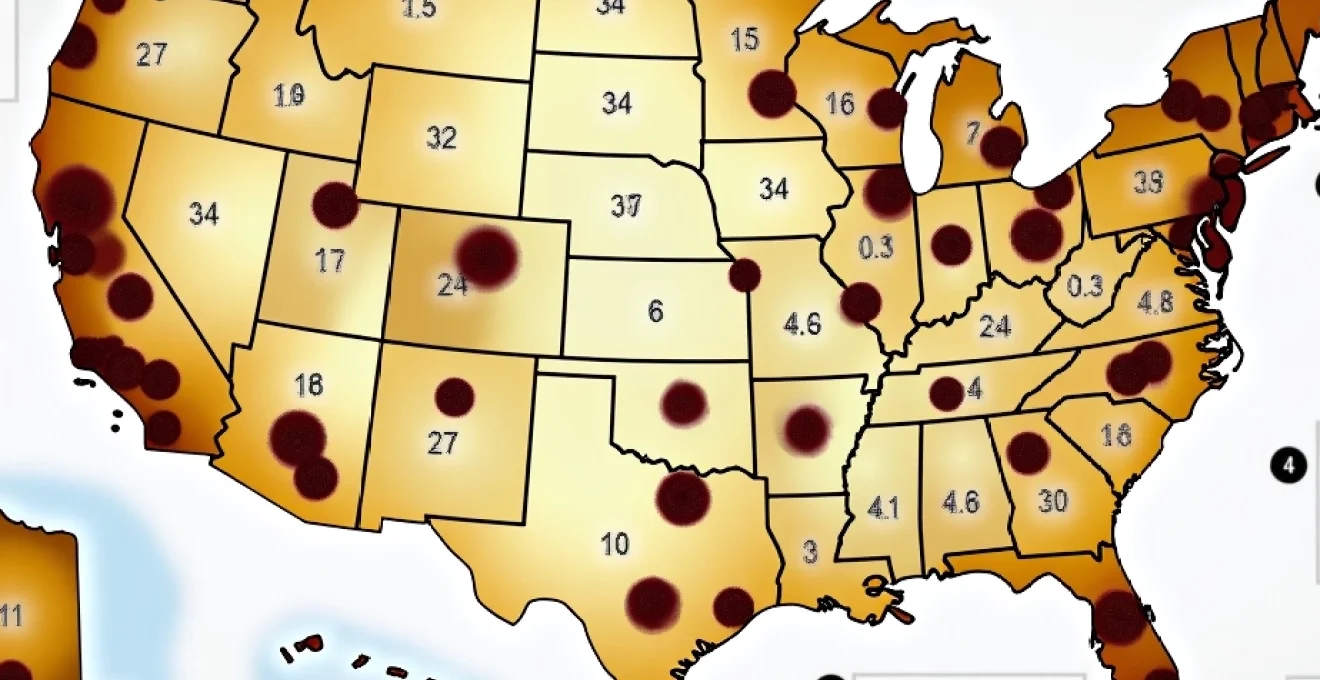
Geographic analysis reveals distinct patterns in malaria case distribution, with certain states consistently reporting higher case numbers due to their roles as major international travel hubs and immigrant gateway communities. Florida, New York, and California represent the highest-burden states, collectively accounting for approximately 60% of all reported cases annually. These states also maintain the most sophisticated laboratory diagnostic capabilities and established clinical expertise in tropical medicine.
The geographic clustering patterns reflect underlying population demographics, with cases predominantly occurring in communities with strong ties to malaria-endemic regions. Spatial analysis indicates that urban centres with major international airports serve as primary entry points for imported cases, while rural areas in certain states maintain competent vector populations capable of supporting local transmission under appropriate circumstances.
Plasmodium species identification through laboratory confirmatory testing
Laboratory diagnostics reveal that Plasmodium falciparum represents the predominant species among reported cases, accounting for the majority of severe disease presentations and fatal outcomes. This species distribution pattern aligns with travel patterns to sub-Saharan Africa, where P. falciparum maintains its position as the most prevalent and dangerous malaria parasite. Microscopic examination remains the gold standard for species identification, supplemented by rapid diagnostic tests and molecular techniques for confirmation.
Reference laboratory testing plays a crucial role in cases lacking clear travel histories or presenting with atypical clinical presentations. Molecular genotyping capabilities enable source attribution and strain characterisation, particularly valuable for investigating potential local transmission events. The CDC’s reference laboratory network provides confirmatory testing services and maintains specialized expertise in distinguishing malaria from morphologically similar parasites such as Babesia species.
Imported versus locally acquired transmission classification protocols
Classification protocols distinguish between imported and autochthonous cases through comprehensive epidemiological investigation focusing on travel history, exposure assessment, and temporal-spatial analysis. The standard investigation period extends back two years from symptom onset, reflecting the potential for delayed onset of P. vivax and P. ovale infections. Case classification accuracy depends heavily on thorough patient interviews and verification of travel documentation, presenting challenges when dealing with incomplete or inconsistent histories.
The emergence of locally acquired cases in 2023 has prompted enhanced investigation protocols incorporating entomological surveillance, environmental assessment, and expanded contact tracing. These investigations require coordination between multiple agencies and specialised expertise in both medical entomology and tropical medicine to establish transmission chains and implement appropriate control measures.
Vector competence assessment: anopheles mosquito species distribution in continental united states
The United States maintains populations of competent malaria vectors across extensive geographic regions, primarily concentrated in the southeastern states but extending into the mid-Atlantic and parts of the western United States. Anopheles species distribution patterns reflect historical presence dating back to the pre-elimination era, with established breeding sites and environmental conditions suitable for population maintenance. Understanding vector competence requires assessment of multiple factors including host preference, longevity, and susceptibility to Plasmodium development.
Contemporary vector surveillance efforts have identified at least 13 Anopheles species with demonstrated or potential malaria transmission capability. However, vector competence varies significantly among species, with some demonstrating strong anthropophilic behaviour while others prefer alternative hosts. Vectorial capacity calculations incorporate mosquito density, survival rates, feeding frequency, and parasite development success rates to assess local transmission potential under varying environmental conditions.
Recent entomological investigations have confirmed the presence of P. vivax DNA in Anopheles crucians mosquitoes captured in Florida outbreak areas, demonstrating active parasite circulation within local vector populations during the 2023 transmission events.
Anopheles quadrimaculatus complex habitat mapping in southeastern regions
The Anopheles quadrimaculatus complex represents the primary vector group of concern across the southeastern United States, encompassing several sibling species with varying biological characteristics and transmission potential. Habitat mapping initiatives have identified extensive suitable breeding sites including permanent freshwater bodies, rice fields, and created wetlands that support stable vector populations throughout the transmission season. Geographic information systems analysis reveals correlation between vector abundance and specific environmental parameters including water chemistry, vegetation patterns, and microclimate conditions.
Population genetics studies within the A. quadrimaculatus complex have revealed significant genetic diversity and local adaptation patterns that influence vector competence and insecticide resistance development. Some populations demonstrate enhanced survival under temperature stress conditions, suggesting potential for range expansion under climate change scenarios. Habitat suitability modelling indicates potential for population establishment in currently uncolonised areas as environmental conditions continue to shift.
Climate change impact on vector survival thresholds and breeding cycles
Climate change effects on Anopheles populations manifest through multiple pathways including extended breeding seasons, expanded geographic range, and altered population dynamics. Temperature increases affect both mosquito development rates and parasite incubation periods, potentially shortening generation times and increasing transmission efficiency. Warming trends have already contributed to earlier spring emergence and delayed autumn population decline in several monitored locations.
Precipitation patterns influence breeding site availability and population stability, with both drought and flooding events creating complex impacts on vector ecology. Thermal tolerance studies indicate that several Anopheles species possess sufficient physiological plasticity to adapt to moderate temperature increases, while extreme weather events may provide opportunities for population bottlenecks and genetic selection. The 2023 locally acquired cases occurred during a period of record-high temperatures, highlighting the potential role of climate factors in facilitating transmission.
Larvicidal control programmes in High-Risk transmission zones
Targeted larvicidal interventions represent a cornerstone of integrated vector management strategies in areas with identified transmission risk. Biological control agents, particularly Bacillus thuringiensis israelensis formulations, provide environmentally sustainable options for larval population suppression in sensitive aquatic ecosystems. Application timing requires careful coordination with mosquito development cycles and environmental conditions to maximise efficacy while minimising non-target effects.
Operational challenges include identifying and accessing all potential breeding sites within extensive wetland systems and maintaining consistent application schedules across large geographic areas. Resistance monitoring protocols assess larvicide effectiveness over time and guide rotation strategies to prevent adaptation. Community engagement and education components ensure public understanding and support for control activities, particularly in residential areas where breeding sites may occur on private property.
Entomological inoculation rate calculations for native anopheles populations
Entomological inoculation rate calculations provide quantitative assessments of malaria transmission potential by measuring the number of infectious bites per person per unit time. These calculations require detailed knowledge of vector density, feeding behaviour, infection prevalence, and human contact patterns within specific geographic areas. Current data suggests that native Anopheles populations maintain extremely low infection rates due to limited exposure to infected humans, but transmission potential exists under appropriate circumstances.
Methodological approaches include human landing catches, light trap surveys, and resting site collections to estimate vector abundance and behaviour patterns. Sporozoite detection methods utilise enzyme-linked immunosorbent assays and polymerase chain reaction techniques to identify infected mosquitoes within collected samples. The challenge lies in detecting rare infection events within large mosquito populations and extrapolating results to estimate community-level transmission risk.
Travel-associated malaria cases: risk assessment and prophylaxis compliance analysis
Travel-associated malaria cases continue to represent the vast majority of domestic infections, with approximately 95% of patients failing to take appropriate prophylactic medications during their international travel. This striking non-compliance rate reflects a combination of factors including inadequate pre-travel counselling, medication side effects, complex dosing regimens, and insufficient risk perception among travellers. The primary travel purposes associated with malaria acquisition include visiting friends and relatives, followed by business travel, with tourists representing a smaller proportion of cases.
Risk assessment protocols must account for destination-specific transmission intensity, seasonal variation, duration of exposure, and individual risk factors including age, pregnancy status, and underlying health conditions. Chemoprophylaxis effectiveness depends on appropriate drug selection based on local resistance patterns, adherence to dosing schedules, and completion of post-travel regimens. The emergence of artemisinin resistance in Southeast Asia has complicated prophylaxis recommendations and highlights the need for ongoing surveillance of drug efficacy.
Among U.S. civilians, visiting friends and relatives represents the highest-risk travel category for malaria acquisition, often associated with longer stays, reduced prophylaxis use, and exposure to higher transmission areas.
Geographic analysis of travel-associated cases reveals that sub-Saharan Africa remains the predominant source of imported infections, accounting for approximately 70% of cases. This pattern reflects both the high transmission intensity in many African countries and the substantial travel volume between the United States and African nations. West African countries, particularly Nigeria, Ghana, and Liberia, represent consistent high-risk sources due to their large diaspora populations in the United States and frequent family visitation patterns.
Autochthonous transmission events: local outbreak investigation protocols
The identification of locally acquired malaria cases in 2023 marked a significant milestone in domestic malaria epidemiology, representing the first such events since 2003. Ten confirmed cases across four states demonstrated the continued potential for local transmission under appropriate environmental and epidemiological conditions. Investigation protocols encompass comprehensive case interviews, contact tracing, vector surveillance, and environmental assessment to characterise transmission chains and implement targeted control measures.
The Florida cluster of seven linked cases provided valuable insights into local transmission dynamics, with molecular analysis confirming a shared P. vivax strain and spatial clustering within a four-mile radius. Outbreak response protocols included immediate vector control activities, community education initiatives, and enhanced surveillance for additional cases. The identification of infected Anopheles mosquitoes within the transmission area confirmed active vector involvement and guided targeted control efforts.
Contact tracing methodologies for index case investigation
Contact tracing protocols for locally acquired cases extend beyond traditional epidemiological approaches to encompass spatial and temporal exposure assessment within vector activity ranges. Investigation teams conduct detailed interviews focusing on outdoor activities, occupational exposures, and residential characteristics that might facilitate mosquito contact. Geographic positioning system technology enables precise mapping of potential exposure sites and guides targeted vector surveillance activities.
The expanded definition of contacts includes individuals sharing geographic space during mosquito feeding periods rather than direct person-to-person contact. This approach requires coordination with local vector control agencies and environmental health specialists to identify and assess all potential transmission sites within the affected area. Community engagement components ensure public cooperation while maintaining privacy protections for affected individuals.
Molecular epidemiology using microsatellite genotyping for source attribution
Advanced molecular techniques provide crucial insights into transmission patterns and source attribution for locally acquired cases. Microsatellite genotyping enables strain characterisation and comparison with global parasite databases to identify potential geographic origins of infections. The 2023 cases demonstrated distinct genetic signatures consistent with Central and South American parasite strains for P. vivax infections and African origins for the P. falciparum case.
Phylogenetic analysis supports investigation of transmission chains and helps distinguish between single-source outbreaks and multiple independent introduction events. Genetic diversity assessment within outbreak clusters provides evidence for local multiplication versus repeated importation from common sources. These molecular tools have become indispensable for understanding complex transmission scenarios and guiding appropriate public health responses.
Environmental sampling techniques for larval source management
Environmental assessment protocols focus on identifying and characterising potential mosquito breeding sites within transmission areas. Systematic sampling approaches include water quality analysis, habitat mapping, and larval density estimation across diverse aquatic environments. Breeding site productivity assessment guides prioritisation of control efforts and helps predict vector population dynamics under varying environmental conditions.
Integrated sampling strategies combine traditional dipping techniques with emerging technologies including remote sensing and geographic information systems analysis. Water chemistry parameters, vegetation characteristics, and microhabitat features influence both mosquito development success and population sustainability. Community-based monitoring programmes engage local residents in breeding site identification and elimination efforts, extending surveillance capabilities beyond professional capacity limitations.
Clinical case management: diagnostic challenges and treatment protocols in Non-Endemic settings
Clinical management of malaria in non-endemic settings presents unique challenges related to diagnostic delay, clinician unfamiliarity, and resource availability. Healthcare providers in the United States encounter malaria infrequently, leading to potential delays in diagnosis and treatment that can significantly impact patient outcomes. The similarity of early malaria symptoms to common viral illnesses often results in misdiagnosis, particularly when travel history is incomplete or absent. Diagnostic accuracy depends heavily on maintaining clinical suspicion and implementing appropriate laboratory testing protocols.
Treatment protocols must account for species identification, severity assessment, and drug resistance patterns while ensuring rapid initiation of appropriate therapy. The 24-hour diagnostic and treatment window represents a critical benchmark for preventing progression to severe disease and reducing mortality risk. Antimalarial drug availability in non-endemic settings requires coordination with CDC stockpiles and specialised pharmaceutical suppliers to ensure timely access to appropriate medications.
Malaria represents a true medical emergency requiring rapid diagnosis and treatment within 24 hours of presentation to prevent progression to severe disease and potential death.
Laboratory diagnostic capabilities vary significantly across healthcare facilities, with many lacking expertise in malaria microscopy or access to rapid diagnostic tests. Reference laboratory networks provide backup diagnostic support and confirmatory testing services, but transportation delays can impact treatment timing. Point-of-care testing technologies offer potential solutions for rapid diagnosis in resource-limited settings, though quality control and interpretation challenges remain significant concerns.
Public health preparedness: malaria elimination strategies and surveillance enhancement programmes
Public health preparedness for malaria in the United States encompasses multiple components including surveillance system enhancement, diagnostic capacity building, and response protocol development. The emergence of local transmission events has highlighted gaps in current preparedness levels and prompted initiatives to strengthen detection and response capabilities. Elimination strategies focus on preventing re-establishment of local transmission while maintaining capacity to detect and respond to importation events and potential outbreaks.
Surveillance enhancement programmes incorporate advanced diagnostic technologies, expanded laboratory networks, and improved reporting systems to reduce detection delays and improve case characterisation. Training initiatives for healthcare providers emphasise recognition of malaria symptoms, appropriate diagnostic approaches, and treatment protocols. Vector surveillance programmes provide early warning capabilities and guide targeted control interventions in high-risk areas.
International collaboration efforts support global malaria control initiatives while strengthening domestic preparedness through shared expertise and resource coordination. The interconnected nature of malaria transmission requires coordinated responses that address both domestic prevention needs and global
elimination efforts that reduce global disease burden and minimise importation risks.
Resource allocation strategies prioritise high-risk areas and populations while maintaining flexible response capabilities for emerging threats. Emergency response protocols establish clear roles and responsibilities for federal, state, and local agencies during outbreak situations. Preparedness assessments evaluate current capabilities against potential scenarios and identify priority areas for capacity building and resource investment. The integration of malaria preparedness into broader emergency management frameworks ensures sustainable support and coordinated response capabilities.
Research initiatives focus on developing improved diagnostic tools, treatment options, and vector control technologies that address specific challenges in non-endemic settings. Partnerships with academic institutions and international organisations facilitate knowledge exchange and collaborative research efforts. Surveillance system modernisation incorporates emerging technologies including geographic information systems, molecular diagnostics, and digital reporting platforms to enhance detection and response speed.
Community engagement programmes educate healthcare providers, travellers, and at-risk populations about malaria prevention and recognition strategies. Public awareness campaigns target specific demographics including immigrant communities, frequent travellers, and residents in areas with competent vector populations. Stakeholder coordination ensures consistent messaging and resource utilisation across multiple agencies and organisations involved in malaria prevention and control activities.
The development of rapid response teams with specialised expertise in tropical medicine, medical entomology, and outbreak investigation enhances capacity to address local transmission events effectively. Training programmes maintain expertise levels and ensure knowledge transfer as personnel changes occur within public health agencies. Technology platforms support real-time communication and data sharing during emergency responses, enabling coordinated action across multiple jurisdictions and agencies.
Long-term sustainability requires ongoing investment in surveillance infrastructure, laboratory capacity, and workforce development to maintain elimination status while preparing for evolving challenges. Climate change adaptation strategies acknowledge shifting environmental conditions that may affect vector distribution and transmission potential. Performance monitoring systems track progress toward preparedness goals and identify areas requiring additional attention or resources to maintain optimal response capabilities.