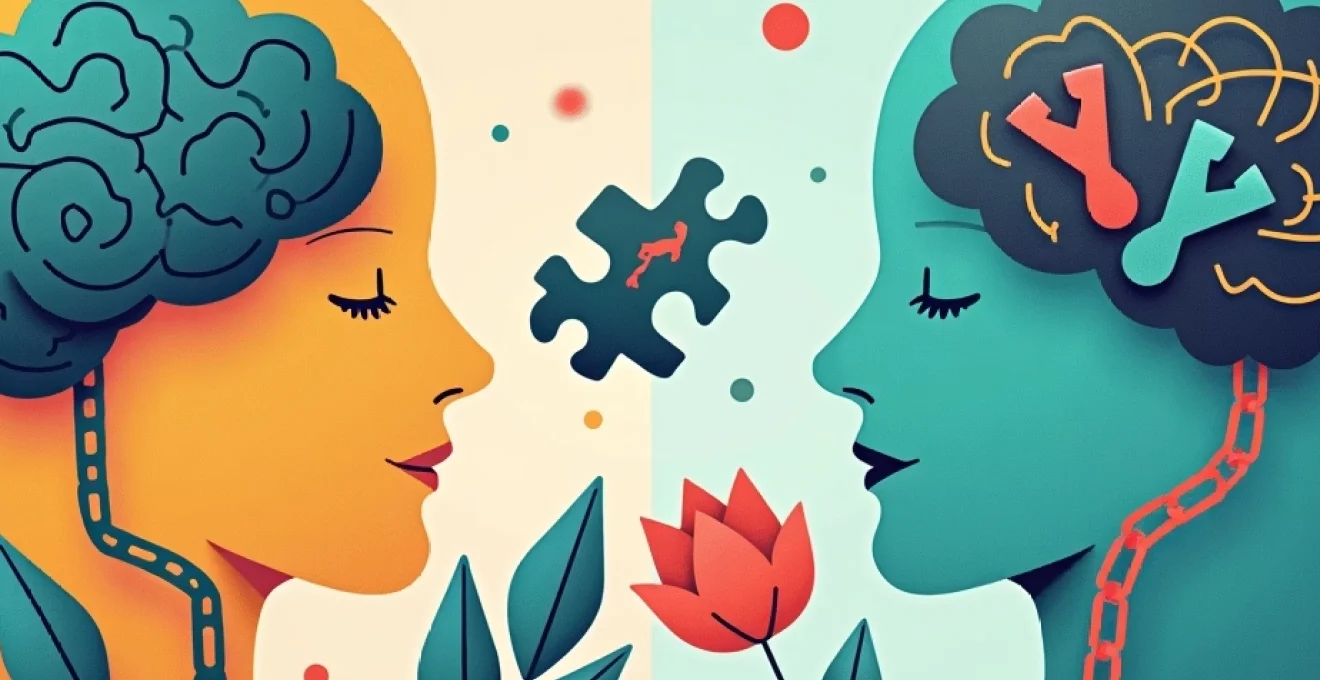
Mental health symbolism has evolved into a sophisticated visual language that transcends cultural boundaries and provides immediate recognition for complex psychological conditions. The search for universal symbols representing anxiety and depression reflects humanity’s fundamental need to communicate internal struggles through external representations. These symbols serve multiple purposes: raising awareness, fostering community connection, reducing stigma, and providing visual anchors for those navigating their mental health journeys. From ancient cultural metaphors to modern advocacy movements, the iconography surrounding mental health conditions continues to expand and adapt to contemporary needs.
The power of symbolic representation in mental health extends beyond mere aesthetic appeal. These visual elements become rallying points for advocacy campaigns, therapeutic tools in clinical settings, and personal talismans for individuals seeking to express their experiences. Understanding the rich tapestry of mental health symbolism requires examining both established international recognition systems and emerging digital-age representations that reflect our evolving relationship with psychological wellbeing.
Universal mental health symbolism in contemporary visual communication
The landscape of mental health symbolism encompasses a diverse array of visual elements that have gained widespread recognition across different cultures and communities. These symbols serve as universal communicators, transcending language barriers and providing immediate understanding of complex mental health concepts. The effectiveness of these symbols lies in their ability to convey both solidarity and hope whilst acknowledging the reality of mental health struggles.
Green ribbon campaign: global awareness movement for mental health advocacy
The green ribbon stands as the most internationally recognised symbol for mental health awareness, representing hope, renewal, and the growth that comes from seeking help and treatment. This symbol emerged from grassroots advocacy movements and has been adopted by major mental health organisations worldwide. The colour green was specifically chosen for its associations with life, growth, and positive change, creating an optimistic visual identity for mental health advocacy campaigns. Mental health professionals frequently incorporate green ribbon imagery into their communications, whilst individuals use it to demonstrate solidarity with those experiencing mental health challenges.
Semicolon project: literary punctuation as suicide prevention symbol
The semicolon has transformed from a grammatical punctuation mark into one of the most powerful symbols in suicide prevention and mental health advocacy. Project Semicolon, founded in 2013, popularised this symbol with the profound message that “a semicolon is used when an author could’ve chosen to end their sentence, but chose not to.” This metaphor resonates deeply with individuals who have contemplated suicide but chose to continue their stories. The simplicity of the semicolon makes it versatile for various applications, from tattoos to social media campaigns, whilst its literary origins provide an intellectual framework for discussing life continuation and personal narrative control.
Puzzle piece iconography: representing mental health complexity and interconnectedness
Puzzle piece imagery has gained significant traction in mental health symbolism, particularly for representing conditions that involve complex interconnections between various symptoms and treatment approaches. This symbol emphasises that mental health recovery often involves finding the right combination of treatments, support systems, and personal strategies that fit together uniquely for each individual. The puzzle piece metaphor also highlights the importance of community and professional support in completing one’s mental health journey, suggesting that no one must face these challenges entirely alone.
Lotus flower metaphor: eastern philosophy in western mental health symbolism
The lotus flower has emerged as a particularly meaningful symbol for mental health recovery, drawing from Eastern philosophical traditions that emphasise growth through adversity. This beautiful bloom rises from muddy waters to flower on the surface, creating a powerful metaphor for emerging from depression, trauma, or other mental health challenges. The lotus represents the possibility of transformation and beauty arising from difficult circumstances, making it especially resonant for individuals in recovery. Many therapeutic settings incorporate lotus imagery to inspire hope and represent the potential for positive change, regardless of how challenging current circumstances might appear.
The lotus teaches us that even in the deepest, darkest waters, something beautiful can emerge and flourish, providing hope to those struggling with mental health challenges.
Clinical depression visual representations and diagnostic imagery
Depression-specific symbolism has developed alongside increased understanding of this complex mental health condition. These visual representations aim to capture the multifaceted nature of depressive disorders whilst providing recognition points for both sufferers and supporters. The challenge lies in creating symbols that acknowledge the severity of depression without perpetuating stigma or oversimplifying the condition’s complexity.
Black dog metaphor: winston churchill’s legacy in depression awareness
Winston Churchill’s famous description of his depression as a “black dog” has become one of the most enduring metaphors in mental health discourse. This imagery captures the persistent, following nature of depression—how it can appear unexpectedly, demand attention, and remain present even during otherwise positive periods. The black dog metaphor has been adopted by numerous mental health organisations and has inspired artwork, literature, and therapeutic discussions. Its effectiveness lies in providing a tangible representation of an intangible experience, allowing individuals to discuss their depression in concrete terms whilst acknowledging its impact on daily life.
Rain cloud iconography: meteorological symbolism in depressive disorders
Weather-based metaphors, particularly rain clouds and storms, have become prevalent symbols for depression due to their universal understanding and emotional resonance. The image of a persistent grey cloud following an individual captures the pervasive nature of depressive symptoms, whilst storm imagery can represent the intensity of major depressive episodes. These meteorological symbols are particularly effective because they acknowledge that depression, like weather, can be temporary and changeable. Many therapeutic interventions utilise weather metaphors to help clients understand that depressive periods will pass, much like storms eventually clear.
Broken chain links: symbolising disconnection in major depressive episodes
The broken chain has evolved as a complex symbol in depression representation, carrying dual meanings that reflect the condition’s paradoxical nature. On one hand, broken chains can represent the disconnection and isolation that characterise depressive episodes—the severing of social bonds, motivation, and emotional connectivity. Conversely, the same imagery can symbolise breaking free from the constraints of depression, representing recovery and the restoration of personal agency. This duality makes the broken chain particularly powerful in therapeutic contexts, where the focus can shift between acknowledging current struggles and envisioning future freedom from depressive symptoms.
Blue awareness ribbons: clinical depression advocacy colour psychology
Blue ribbons specifically represent depression awareness, distinguishing this condition from general mental health advocacy represented by green ribbons. The choice of blue reflects both the cultural association between this colour and feelings of sadness, as well as its calming properties that can represent hope for peace and stability. Depression advocacy campaigns frequently employ various shades of blue, from deep navy representing the depth of depressive experiences to lighter blues symbolising hope and recovery. This colour psychology creates immediate recognition whilst providing a sophisticated visual identity for depression-specific awareness initiatives.
Anxiety disorder symbolic framework and visual identity systems
Anxiety disorders require distinct symbolic representation that captures the urgent, overwhelming nature of these conditions whilst providing hope for management and recovery. The visual language surrounding anxiety has evolved to encompass both the physiological and psychological aspects of these disorders, creating comprehensive symbolic systems that resonate with diverse experiences.
Teal ribbon recognition: generalised anxiety disorder awareness campaigns
Teal ribbons serve as the specific awareness symbol for anxiety disorders, chosen for their calming properties and association with emotional balance. This colour selection reflects the therapeutic goal of achieving equilibrium in anxiety management, whilst providing a distinct visual identity separate from other mental health conditions. Anxiety awareness campaigns frequently incorporate teal elements in their branding, creating consistent recognition across different platforms and organisations. The colour’s association with water also evokes feelings of flow and adaptability, qualities essential for successful anxiety management strategies.
Spiral imagery: mathematical representations of anxiety thought patterns
Spiral symbols have gained significant recognition in anxiety representation due to their ability to visually capture the cyclical, escalating nature of anxious thoughts. These mathematical forms illustrate how anxiety can begin with a small concern and spiral into overwhelming worry patterns that seem to feed on themselves. The spiral metaphor is particularly effective in therapeutic settings, where clients can visualise their thought processes and work on interrupting the spiral pattern. Different spiral directions can represent various aspects of anxiety—inward spirals might represent rumination, whilst outward spirals could symbolise the expanding impact of anxiety on daily life.
Butterfly effect symbolism: chaos theory in panic disorder visualisation
The butterfly effect, derived from chaos theory, has found meaningful application in panic disorder representation. This concept illustrates how small triggers can lead to significant anxiety responses, much like how minor events can precipitate full panic attacks. Butterfly imagery in anxiety contexts often emphasises transformation and the delicate nature of mental state changes. The symbol acknowledges that whilst small things can trigger anxiety, small positive changes can also create significant improvements in mental health outcomes. This dual meaning provides both validation for those experiencing seemingly disproportionate anxiety responses and hope for achievable recovery strategies.
Labyrinth metaphors: navigational complexity in anxiety treatment pathways
Labyrinth and maze imagery effectively represents the complex navigation required in anxiety treatment and recovery. These symbols acknowledge that finding the right combination of therapies, medications, and coping strategies can feel like navigating a complex pathway with multiple dead ends and false starts. Unlike simple mazes, labyrinths have a single path to the centre, representing the therapeutic journey where persistence and guidance eventually lead to resolution. This imagery is particularly valuable in clinical settings, where it can normalise the complexity of treatment whilst maintaining hope for eventual success.
Cultural and religious symbolic interpretations across mental health communities
Mental health symbolism varies significantly across different cultural and religious contexts, reflecting diverse approaches to understanding psychological wellbeing and treatment. These variations highlight the importance of culturally sensitive mental health advocacy and the need for inclusive symbolic representations that resonate across different communities. Eastern philosophical traditions often emphasise balance and harmony, leading to symbols like the yin-yang for representing the dual nature of mental health experiences.
Indigenous cultures frequently incorporate animal symbolism into mental health representation, with different creatures representing various aspects of psychological healing and resilience. The turtle, for example, symbolises carrying one’s home and finding stability within oneself, whilst the eagle represents rising above challenges and gaining perspective. These animal metaphors provide culturally relevant frameworks for discussing mental health within indigenous communities, creating bridges between traditional healing practices and contemporary mental health approaches.
Religious symbolism intersects with mental health representation in complex ways, often providing comfort and meaning for believers whilst requiring sensitive handling to avoid alienating secular individuals. Christian symbolism might incorporate crosses or doves to represent peace and salvation from suffering, whilst Islamic traditions might emphasise geometric patterns representing order and divine guidance. Buddhist and Hindu traditions contribute lotus flowers, om symbols, and meditation figures that represent mindfulness and spiritual approaches to mental wellbeing.
Cultural sensitivity in mental health symbolism ensures that visual representations resonate authentically with diverse communities whilst avoiding appropriation or misrepresentation of sacred elements.
Digital age symbol evolution: social media and mental health iconography
The digital revolution has transformed mental health symbolism, creating new visual languages adapted for social media platforms and online communities. Emoji combinations have emerged as shorthand for mental health states, with specific sequences becoming recognised signals for depression, anxiety, or support needs. The green heart emoji, for instance, has gained association with mental health support, whilst the upside-down smiley face often represents hidden struggles or ironic responses to mental health challenges.
Social media platforms have inadvertently created new symbolic frameworks through their interface design. The “like” button has become a symbol of social validation that can significantly impact mental health, whilst the notification bell represents the anxiety-inducing nature of constant connectivity. Mental health advocates have begun subverting these digital symbols, encouraging followers to engage meaningfully rather than seeking superficial metrics of social approval.
Hashtag activism has created powerful symbolic movements within mental health advocacy, with campaigns like #BellLetsTalk and #EndTheStigma becoming instantly recognisable rallying points. These digital symbols combine text and visual elements to create memorable campaigns that spread awareness through social sharing mechanisms. The viral nature of these campaigns demonstrates how digital symbolism can achieve unprecedented reach in mental health advocacy, connecting individuals across geographical and cultural boundaries.
Online mental health communities have developed their own symbolic languages, often incorporating elements from gaming, pop culture, and internet memes to create relatable representations of mental health experiences. These symbols evolve rapidly, reflecting the dynamic nature of digital culture whilst providing contemporary relevance for younger demographics who might not connect with traditional mental health symbolism.
Therapeutic applications of symbolic representation in clinical practice settings
Mental health symbols have found significant application within therapeutic environments, where they serve multiple functions from assessment tools to therapeutic interventions. Art therapy frequently incorporates symbolic exploration, allowing clients to express complex emotions and experiences through visual representation rather than verbal communication alone. This approach can be particularly valuable for individuals who struggle to articulate their mental health experiences or who have experienced trauma that makes verbal expression challenging.
Cognitive behavioural therapy often utilises symbolic thinking to help clients restructure negative thought patterns. Therapists might encourage clients to visualise their anxiety as a specific symbol or creature, then work on developing strategies for managing or transforming that representation. This technique creates psychological distance from overwhelming emotions whilst providing concrete imagery for implementing coping strategies. The process of symbol selection and exploration can reveal important insights about client perspectives and treatment preferences.
Group therapy settings frequently employ shared symbolic frameworks to create common understanding and facilitate discussion. Participants might use weather metaphors to describe their current mental state, or choose from a selection of symbolic cards to represent their therapy goals. These shared symbolic languages create community and reduce isolation whilst providing structured frameworks for emotional expression. The collective interpretation of symbols can also provide new perspectives and insights that individual therapy might not reveal.
Clinical assessment tools increasingly incorporate symbolic elements to capture nuanced mental health information that traditional questionnaires might miss. Visual analogue scales using symbolic representations can help clients communicate complex emotional states, whilst symbolic timeline exercises can reveal patterns in mental health experiences that might not emerge through standard clinical interviews. These approaches acknowledge that human experience often transcends purely rational or verbal expression, requiring more holistic assessment methodologies.
Treatment planning frequently benefits from symbolic frameworks that help both clinicians and clients visualise the recovery journey. Mapping therapeutic goals using symbolic representations can make abstract concepts more concrete and achievable, whilst providing motivational imagery that clients can reference throughout their treatment. The collaborative creation of personal symbol systems can enhance treatment engagement and provide powerful tools for self-monitoring and progress tracking throughout the therapeutic process.